
VR is primarily used as a visualisation tool, so the limits to its application to the modern world is limited only by the Imagination. Experience is everything in today's society, so a tool that can simulate experience can be used in many ways. I will list by area the main current uses of VR.
VR has a lot to offer for education and excelerated learning, as it provides a controlled learning environment where children can visualise concepts through imagery and interaction.
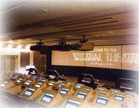
In Nagoya Japan one of the first Virtual theatres provides a 48 M.U.D (multi-user-domain) imersive VR network where a large group of school children can explore and investigate a virtual pond and by photographing the animals and insects they meet, they can learn about complex interactions between man and the environment. This method of learning can also be applied to many other areas of teaching including visits back in time to virtual worlds of the past.
This is the most widely used application of VR and is very effective in many industries. Following World war 2 the military has been pumping millions of dollars into the technology as it escapes all of the huge costs and safety risks in training in many areas, the main being Flight Simulators, Driving Simulators, Ship Simulators, Tank Simulators, Training for hazardous or difficult situations, nuclear plant maintanace, Learning to move in zero gravity, Locating and fixing faults in equipment Anything you can imagine can be constructed to suit a training programme.
VR is used successfully in training for risky situations, such as surgery, where VR can offer a safe and realistic operating situation where a trainee surgeon can touch and feel a 3D object using his fingertip, even feeling a pop as each layer of tissue is pierced.
Virtual galleries and museums can be created to allow people to experience what it may be like to visit the Sistine chapel for example, or virtual theatres where you can sit in a virtual audience and see a play or concert.
VR is a vast new medium that can allow for many new art projects combining moving imagery, sound, feeling and atmosphere, which allows for a much more direct connection between the artists vision and the viewers interpretation. The games and entertainment industry have made virtual reality available to the public, by providing interactive simulations with a strong sense of realism in a world confronting different situations and enemies, by placing the player in the cockpit of a plane/car or the body of an armed fighter, the involvement of the participant is greatly increased, and also the enjoyment. The current development in games consoles is allowing for these virtual devices to be integrated as the marketing values are infinite. You won't be surprised to know that VR is used in sports and fitness training,
"It is only now that we have sufficiently high-powered and low-costing computers to think of this technology as a consumer entertainment medium. In this new context, it will be nothing short of awesome".
(Nicholas Negroponte, Being Digital 1995)




In the US a company called 'Interax' have developed a virtual fitness instructor called 'Ultracoach VR' where you can cycle, exercise and train in a VR environment where heart rate, speed data e.t.c can be displayed.



|
|